Ethical and Justice Issues At the Center of the Warsaw Climate Negotiations-Issue 3, Financing Adaptation in Vulnerable Counties, and Issue 4, Ethical Responsibilities for Loss and Damages.

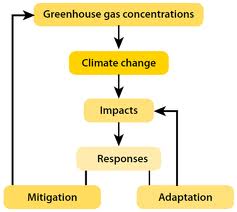
adaptationadaptation picture

I. Introduction 

This is the fourth paper in a series which is looking at the ethical issues entailed by the negotiation agenda at COP-19 in Warsaw. The firs two papers looked at ethical issues entailed by the need for increasing ambition for national ghg emissions reduction commitments in the short-term and the second examined ethical issues created by urgent needs of nations to commit to significant ghg emissions reductions in the medium- to long-term. This paper concludes a series that has been examining ethical issues in play at Cop 19 before the conclusion of the Warsaw COP.  Additional papers in the series will again look at these issues in light of what actually happens in Warsaw.

In this paper we look at two issues together, namely ethical issues entailed by the need of many developing countries to find funding necessary to adapt to climate change and the related question of funds needed to compensate vulnerable countries and peoples for losses and damages that are not avoided by protective adaptation measures. These two issues are being examined in the same paper because ethical obligations for adaptation and compensation spring from the same ethical and legal considerations. We conclude in this paper that high-emitting nations have an ethical responsibility to fund adaptation needs in vulnerable nations and to provide funds for loss and damages in these nations despite difficult questions in determining precisely what the amount of these obligations are.

II. Ethical Responsibility for Funding Adaptation

The international community agreed in Copenhagen in 2009 to raise $100 billion annually by 2020 to fight climate change – in addition to the $30 billion they pledged to raise through 2012 in “fast-start” financing for the developing world. This funding has not yet materialized and it is not certain whether rich nations will be able to meet the 2020 goal. This paper looks at the ethical obligations of developed countries to provide this funding.

The United States and other industrialized countries committed to such assistance through the United Nations Framework Convention on Climate Change (UNFCCC), the Copenhagen Accord (2009), and the Cancun Agreements (2010), wherein the higher-income countries pledged jointly up to $30 billion of “fast start” climate financing for lower-income countries for the period 2010-2012, and a goal of mobilizing jointly $100 billion annually by 2020. The Cancun Agreements also proposed that the pledged funds are to be new, additional to previous flows, adequate, predictable, and sustained, and are to come from a wide variety of sources, both public and private, bilateral and multilateral, including alternative sources of finance.new book description for website-1_01

The United States and European Union, citing budget constraints, have refused to put concrete figures on the table during COP-18 in Qatar last year.
 A Green Climate Fund agreed at the Durban conference to spearhead funding to combat climate change, still has no money.
 For this reason, funding for needed adaptation in vulnerable countries is high-priority agenda item in Warsaw.

As we shall see, that high-emitting nations have responsibility for funding adaptation measures in developing countries is a conclusion that can be based on strong ethical grounds despite reasonable disagreements about such matters as when the ethical responsibility was triggered, which kinds of adaptation measures should be funded now, and the need to distinguish between responsibilities that arise due to the “fault” of high-emitting countries and responsibilities which arise without attributing “fault.”

High-mitting developed countries have undeniable ethical obligations to fund reasonable adaptation measures in vulnerable developing countries both as a matter of sound ethical reasoning and international law. This obligation exists even though reasonable disagreement exists about the details of this funding. It is therefore ethically unacceptable for some nations to assert that because there is disagreement about the details of funding obligations for adaptation, they need not commit to funding adaptation needs.

A rigorous ethical analysis of the obligations of high-emitting developed nations to fund reasonable adaptation measures is beyond of the scope of this paper. (For such analysis see: Brown, 2013, Chapter 7, and Grasso, 2009) Yet the outlines of this analysis are as follows:

The developed countries are most responsible for the human-induced warming which the world is experiencing and is threatening hundreds of millions of people around the world because of the levels of both historical ghg emissions amounts and high per-capita ghg emissions that have been increasing ghg atmospheric concentrations. In addition, those most vulnerable to climate change damages are often the least responsible for greenhouse gas emissions. Therefore, those who could most benefit from adaptation measures are often least responsible for excessive greenhouse gas emissions. This is true both at the national and the local level.

In addition, those most vulnerable to climate change are often least able to afford adaptation measures such as dikes, irrigation to compensate for droughts, moving away from flood or storm prone areas, installing HVAC systems and implementing improved public health systems.

In general terms, a society’s vulnerability to human-induced climate depends upon its poverty. The Pew Center for Climate Change described vulnerability to climate change as follows:

Vulnerability to climate change reflects its degree of exposure and its capacity to adapt. Exposure has two principal elements: the climatic conditions themselves, and the extent and character of the population, wealth, and development exposed to them. Capacity is a society’s ability to adapt to changing climatic conditions, whether by reducing harm, exploiting beneficial new opportunities, or both. This ability to adapt, whether to changing climate or other new circumstances, is in part a function of a society’s level of wealth, education, institutional strength, and access to technology. The nature and the extent of a society’s development, therefore, heavily influence both its degree of exposure to climate risks and its capacity to adapt.

(Burton et al. 2006)

Because vulnerability to climate change is both a function of where harsh climate change impacts will be experienced and the financial ability of people to adapt, many poor developing countries are particularly vulnerable to climate change.

That those who are causing climate change have an ethical responsibility to protect those who could be seriously harmed by human-induced warming by funding responsible adaptation measures is a conclusion that follows from numerous ethical theories and several international law principles.

Almost all the world’s religions, basic human rights theories, and numerous other ethical arguments hold that no person has a right to greatly harm someone else without their consent. In fact, the right to life and security is considered a core human rights principle that has been accepted by almost all nations in the world. All nations that are responsible for the violation of human rights have clear duties to restore conditions required to assure that the rights are enjoyed.

Some nations have denied responsibility for compensation and adaptation costs in climate change negotiations. Yet norms about responsibility for damages from human-induced climate change are well established not only by most ethical theories but also in a variety of international agreements, including the Rio Declaration on Environment and Development (UN, 1992b), United Nations Framework Convention on Climate Change (UN 1992a).

The Rio Declaration on Environment and Development states in relevant part:

• States have, in accordance with the Charter of the United Nations and the principles of international law, the sovereign right to exploit their own resources pursuant to their own environmental and developmental policies, and the responsibility to ensure that activities within their jurisdiction or control do not cause damage to the environment of other States or of areas beyond the limits of national jurisdiction (UN 1992b: Principle 2, emphasis added).

• National authorities should endeavor to promote the internalization of environmental costs and the use of economic instruments, taking into account the approach that the polluter should, in principle, bear the cost of pollution, with due regard to the public interest and without distorting international trade and investment (UN 1992b, Principle 16, emphasis added).

• States shall develop national law regarding liability and compensation for the victims of pollution and other environmental damage. States shall also cooperate in an expeditious and more determined manner to develop further international law regarding liability and compensation for adverse effects of environmental damage caused by activities within their ‘s point is he or hejurisdiction or control to areas beyond their jurisdiction (UN 1992b, Principle 13, emphasis added).

Additional norms relevant to national responsibility for damages caused by one nation to another are contained in UNFCCC including:

• Recalling also that States have, in accordance with the Charter of the United Nations and the principles of international law, the sovereign right to exploit their own resources pursuant to their own environmental and developmental policies, and the responsibility to ensure that activities within their jurisdiction or control do not cause damage to the environment of other States or of areas beyond the limits of national jurisdiction (UN 1992a: Preface, emphasis added).

• The Parties should protect the climate system for the benefit of present and future generations of humankind, on the basis of equity and in accordance with their common but differentiated responsibilities and respective capabilities. Accordingly, the developed country Parties should take the lead in combating climate change and the adverse effects thereof (UN 1992a: Art. 3, emphasis added).

• The Parties should take precautionary measures to anticipate, prevent, or minimize the causes of climate change and mitigate its adverse effects. Where there are threats of serious or irreversible damage, lack of full scientific certainty should not be used as a reason for postponing such measures, taking into account that policies and measures to deal with climate change should be cost-effective so as to ensure global benefits at the lowest possible cost (UN 1992a: Art 3, emphasis added).


These provisions of international law have been agreed to by all almost all nations and establish clear national responsibilities to not harm others beyond their jurisdiction, to pay for the damages to those beyond their borders who are harmed by domestic ghg emissions, and to not use scientific uncertainty as an excuse for failing to take protective action. Yet many nations have caused, and continue to cause climate change damages while they have refused to limit their emissions to their fair share of safe global ghg emissions, compensate those who have been harmed, or provide adequate, predictable funding for adaptation. Yet, the above international law provisions make it clear that nations have obligations to others to prevent climate change damage. Consequently, their failure to take action to reduce the threat of climate change makes them responsible for climate change harms and therefore responsible for funding reasonable adaptation measures of developed nations needed to prevent harm.


loss and damage

 III. Responsibility for Compensation for Climate Change Harms

Innocent people around the world will suffer harms that should be compensated by those who are responsible for climate change because: (a) there is insufficient money to support all the adaptation that is needed, (b) some harms have already occurred, (c) time does not allow for the adoption of adaptation measures necessary to protect some vulnerable people from harm, (d) it is impossible to predict where some harms will occur, or (e) the technology to protect against some of the harms is not now available. For instance, although biological sciences have produced some drought resistant crops, for other crops no drought resistant strains have yet been developed.

From this, the following conclusions can be made. Some climate change harms are unavoidable, others harms can be prevented or minimized through adaptation, and some harms have already happened. Yet, those experiencing these harms are rarely those who are most responsible for them. For this reason, developed nations have responsibility to compensate vulnerable nations and people for the harms from human-induced climate change.

IV. Difficulties In Determining Precise Amounts of Funding Amounts for Adaptation And Compensation Obligations of Individual Nations.

Thus far we have explained why high-emitting nations have clear duties to fund both reasonable adaptation in vulnerable developing countries and compensation for climate change harms in countries that have done little to cause climate change. Yet, there are, however, a number of issues that make it difficult to say what precisely is the magnitude of financial obligations for adaptation and compensation of any one nation. Looking at these issues in detail is beyond the scope of this article. (For more detailed analysis of these difficulties see Brown, 2013, Chapter 7 and Grasso, 2009.)

These issues include: (a) the need to determine when the obligation of any nation is triggered, (b) difficulties in determining which adaptation and compensation needs are attributable to human-induced warming versus natural variability, (c) challenges in allocating responsibilities among all nations that have emitted ghg above their fair share of safe global emissions, (e) challenges in prioritizing limited funds among all adaptation and compensation needs, (f) needs to set funding priorities in consultation with those who are vulnerable to climate change impacts as a matter of procedural justice, and (e) the need to consider the capacity of some nations to fund adaptation and compensation needs.

V. The Obligations of Nations To Fund Adaptation Needs and Compensate for Loss and Damages Despite Challenges in Determining Precise National Obligations.

As we have seen there are many challenges in determining precise obligations of nations for adaptation and compensation. However, these difficulties do not justify nations from ignoring their obligations for adaptation and compensation. The fact that there are challenges in working through what precisely are any nation’s obligations is not justification for failing to fund adaptation nor compensate for losses and damages.

To overcome some of the challenges in determining precise obligations, international institutional responses such as funding needs through common forms of taxation, dedication of trading revenues for use for adaptation and compensation, and other institutional responses of high-emitting countries are worthy of serious consideration.

References:

Brown, Donald, 2013, Climate Change Ethics, Navigating the Perfect Moral Storm, Routledge, Earth Scan, London and New York

Burrton, I., Deringer, E., and Smith, J. (2006) ‘Adaptation to climate change, international policy options’, Pew Center for Climate Change, available at: <http://www.pewclimate.org/docUploads/PEW_Adaptation.pdf&gt; (accessed 7 March 2012)

Grasso, Marco, 2009, An Ethical Approach to Adaptation Funding, Gl0bal Environmental Change, http://www.yumpu.com/en/document/view/9873146/an-ethical-approach-to-climate-adaptation-finance-marco-grasso

United Nations (UN) (1992a) ‘United Nations framework convention on climate change’, UN Document, A: AC237/18.

United Nations (UN) (1992b) ‘The Rio Declaration on Environment and Development’, UN Document A/CONF.151/26.

By:

Donald A. Brown

Scholar In Residence and Professor

Sustainability Ethics and Law

Visiting Professor, Nagoya University, Nagoya, Japan

Part-Time Professor, Nanjing University of Information Science and Technology,

Nanjing, China


Retrospective Moral Intuitions on Equity Dominate the Warsaw Talks as the UN Climate Conference Transitions into its Second Week.

warsaw

Editor’s note: The following entry is a report from Idil Boran who shares her views about the ethical issues in play in the Warsaw Climate Negotiations at the end of the first week. Ethicsandclimate.org  has posted three of several articles to be posted which are looking at the ethical issues entailed by the Warsaw agenda. This series will continue this week. At the conclusion of the Warsaw meeting, the series will review how the ethical issues were dealt with in Warsaw.

Idil Boran is  attending the Warsaw negotiations and is Associate Professor and Director of the Certificate Program in Practical Ethics, Department of Philosophy, York University, Toronto, Canada.  For inquiries, contact iboran@yorku.ca


Retrospective Moral Intuitions on Equity Dominate the Warsaw Talks as the UN Climate Conference Transitions into its Second Week


The 19th Conference of the Parties at the United Nations Framework Convention on Climate Change (UNFCCC) is taking place in Warsaw, Poland’s capital, through November 11-22, 2013.  As the first week of the conference ended, the delegates have taken a break on Sunday to prepare for the second week.  The discussions at the National Stadium in Warsaw, the official venue of COP 19, have so far been tense, which is to be expected.  This is in many respects a critical year for climate negotiations.  With 2015 in the horizon, pressure is building up to establish the details of a possible new treaty to be adopted in 2015 as the outcome of the Durban Platform for Enhanced Action.

Two issues came the forefront on the first week, setting the tone for the week to come.

  1. Historical emissions

Brazil put forward a proposal, supported by China, to use historical emissions levels going back to the industrial turn of mid-nineteenth century, in order to determine how much countries should be allowed to emit in the future.  Both the European Union and the United States have categorically rejected this proposal.  This issue is clearly highly divisive.  Yet, at the same time, a focus on past emissions has long been a recurrent rationale at COP meetings, as it resonates in the minds of many negotiating parties as a possible starting point for establishing fair terms of cooperation.

  1. Loss and damage

An agreement in principle was reached in Doha, Qatar, at COP 18 in 2012 to include a “loss and damage” clause in the new treaty.  Prompted by the destruction in the aftermath of typhoon Haiyan, last week’s discussions were heavily focused on claims of compensation against loss and damage associated with climate change.  The suggested scheme, supported by many developing countries, is that developed countries would pay compensation to developing countries experiencing a weather-related disaster. There are difficulties with this proposal, however.  Although weather extremes are to be expected in world affected by climatic change, associating a single event with climate change is not straightforward, which is why the discussions on this issue remain deeply politicized and highly contentious.

nw book advWhat these issues have in common is that they both put forward a conception of equity appealing to a principle of corrective justice.  Both proposals follow a retrospective logic for establishing equitable terms for allocating the costs of climate change within a possible treaty.  The former is concerned with the costs of mitigation.  And the latter is concerned with the costs of adaptation.  Nevertheless, both perspectives consist of looking at the past for identifying wrongdoing, and request compensation from those viewed to be responsible for climate change.

Yet, establishing fair terms of cooperation need not be based on a retrospective logic, and the thinking certainly need not revolve so narrowly on compensation.  This way of thinking consists of allocating costs and responsibilities by appealing to claims of blame and liability.  These appeals bring to the negotiation table tort-like intuitions, which are more divisive than cooperative.  Equitable cost sharing can be conceptualized within a forward-looking framework, by identifying needs and capacities and moving onwards into a future where genuine cooperation will be needed. Even on the issue of loss and damage, policy can be designed to achieve a system of cooperation against weather disasters based on risk-sharing and risk-transfers, without focusing so narrowly on placing blame.  This kind of policy would provide more than ad hoc disaster aid and would help build resilience in vulnerable countries on an ongoing basis. Although retrospective moral thinking is highly intuitive, the worry is that this way of conceptualizing equitable cost sharing may seriously jeopardize the possibility of an agreement.

The international community has an interest in conducting discussions within non-retrospective and forward-looking parameters for equitable cost sharing.  It would be unfortunate if the negotiations became deadlocked because of insistence on retrospective moralizing on these two issues.  How the discussions will unfold at National Stadium throughout the second week of the conference is yet to be seen.

By: 

Idil Boran

 iboran@yorku.ca

The Ethical and Justice Issues At the Center of the Warsaw Climate Change Negotiations-Issue 2, Equity and National GHG Emissions Reductions Commitments in the Medium- to Long-Term


climate justice

This is the third paper in a series which is looking at the ethical and justice issues entailed by the Warsaw climate change negotiating agenda. This paper looks at issue two, namely, the ethics and justice issues entailed by the need to find a global solution to climate change that includes national ghg emissions targets after 2020. The last entry looked at ethical issues entailed by the need to increase the ambition of national emissions targets before 2020 when a new climate change treaty that will be negotiated by 2015 comes into effect.

new book description for website-1_01The issues of long-term national commitments to reduce ghg emissions is being negotiated in Warsaw under the Durban Platform. The Ad Hoc Working Group on the Durban Platform for Enhanced Action (ADP) is a subsidiary body of the UNFCCC that was established by a decision of the Durban COP in December 2011. The mandate of the ADP is to develop a protocol, another legal instrument, or an agreed outcome with legal force under the Convention applicable to all Parties, which is to be completed no later than 2015 in order for it to be adopted at the twenty-first session of the Conference of the Parties (COP) and for it to come into effect and be implemented from 2020. Among many other issues, the new treaty will need to take a position on several issues relating to national ghg emissions obligations after 2020.

The last entry in this series examined some of the most recent scientific evidence that has concluded that the world is rapidly running out of time to prevent dangerous climate change. The staggering magnitude of the challenge facing the international community to limit warming to 2 degrees C can be visualized by understanding the following chart that depicts three ghg emissions reductions pathways which would allow the world to stay within a specific remaining budget to achieve a specific atmospheric concentration of ghgs. As we explained in the last entry, the IPCC has in September of this year described a budget that would give the world a 66% confidence of preventing the 2 degree C warming limit which the international community has agreed upon.

Any atmospheric ghg concentration target can only state the warming that will be experienced at the concentration limited by  a probability statement because there is scientific uncertainty about climate sensitivity, a term which is used to describe the warming that will be caused by different concentration of atmospheric ghgs. The level of certainty that we should seek to limit warming to a specific atmospheric concentration is itself an ethical question, not just a scientific question which often goes unexamined by the scientific community when discussing warming limits and emissions budgets to achieve warming limits.

One might ask why the budget prepared by IPCC was not based upon achieving the 2 degree C with much higher levels of certainty, a question which is not discussed in the IPCC report, yet one might speculate that IPCC’s failure to discuss a budget that would assure 100% certainty that the 2 degree C warming limit would not be exceeded was because it would leave no remaining budget for additional ghg emissions. The international community has already emitted so much CO2 that limiting warming to 2 degrees C with very high levels of certainty would mean that future emissions must be negative emissions, that is activities which remove ghg from the atmosphere while immediately ceasing ghg emissions activities.

As we have seen in the last entry, if the IPCC budget would have included all ghgs that have been emitted, it would have concluded that there remains only 269 billion tons of CO2e left to be emitted by the entire global community to stay within an emissions budget that will give a 66% confidence that the 20C warming limit would not be exceeded. Achieving the global reductions entailed by this budget is a civilization challenging problem of the highest magnitude.

The following chart prepared by the Global Commons Institute provides a visualization of the enormity of the challenge entailed by a budget of approximately 242 billion tons. This chart shows 3 different potential missions reductions pathways which will stay within the budget which differ depending upon how fast the needed emissions reductions are begun. The later global emissions peak and begin to be reduced, the steeper the emissions reductions pathways must become. This fact alone leads to the conclusion that any delay in emissions reductions has ethical significance because the steeper emission reductions are needed, the more difficult, if not impossible, it becomes to achieve the needed reductions. For this reasons, those who have been advocating for a delay in implementing a very aggressive ghg emissions policy can be understood to be engaged in ethically troublesome activities because it is alreadly likely to be too late to prevent some very serious consequences from climate change to hundreds of millions of people around the world.

Slide22

This chart, being a depiction of total global emissions reductions pathway, does not attempt to display what the emissions reductions pathway in any one nation would be if equity and justice were to be taken seriously by nations. High emitting nations will need even steeper reductions in global missions than those depicted in the above  chart. If there is any hope of achieving the global emotions needed to limit warming to 2°C, as we explained in the last entry in the series, nations will need to limit their emissions based upon equity. Yet, equity-based emissions for high emitting developed countries will lead to an even greater challenge for high emitting nations. The following chart, also prepared by the Global Commons Institute, depicts what the US share of total global missions must be if United States were to agree on a per capita allocation of the remaining global budget to satisfy its clear obligations to take equity into account although this chart would change depending upon when nations would agree on equal per capita shares and when global emissions peaked. Nevertheless it is helpful to demonstrate the enormity of the challenge entailed by the undeniable need to take equity into account by depicting the consequences for one nation as this chart does.

Slide23

This chart uniquely shows why the United States and other high-emitting nations likely do not want to discuss “equity” in the Warsaw climate negotiations. If United States and other high-emitting nations were to take seriously its obligation to reduce its emissions based upon equity or distributive justice, such a decision would create an enormous challenge for them. And so, it would appear that the United States and several other developed countries have entered the Warsaw negotiations as if they can ignore the equity and justice issues while justifying their national ghg reductions commitments ultimately on the basis of national economic interest.

However, emissions reductions commitments based upon national economic interest can not be understood to satisfy any reasonable definition of equity or plausible formula for distributive justice.

Distributive justice does not require that all parties be treated equally. But distributive justice does require that parties who want to be treated differently justify their different treatment on the basis of morally relevant criteria. For instance, according to theories of distributive justice, I cannot justify my desire for more food on the basis that I have blue eyes. The color of my eyes it not a relevant basis for unequal treatment when it comes to food distribution. For the same reason, a justification for national ghg emissions reduction target commitments  based upon national economic interest alone that does not consider global responsibilities does not pass minimum ethical scrutiny. It is totally ethically bankrupt.

Many commentators on the “equity” issue arising in international climate negotiations dismiss any plea for “equitable” allocations on the basis that because different people reach different conclusions about what equity requires the search for an equitable global solution to climate change should be abandoned. For instance it has been reported that the United States has resisted discussing equity on the basis that there is no objective way of determining what equity requires.

Yet the fact that different people reach different conclusions about what equity means does not mean that all opinions about what acting equity means or entitled to respect. As we’ve seen, theories of distributive justice require that people want to be treated differently identify morally relevant criteria for being treated differently. As we have seen, the color of my eyes is not a morally relevant criteria were being treated differently. Similarly my race is not a morally relevant justification for giving me the right to vote above others.

The world urgently needs a deeper conversation about equity and justice and national climate change policies.

To move the equity debate along, nations should be required to specify specifically how their emissions reductions commitments deal with both the enormity of the challenge entailed by the global emissions budget identified by the IPCC and how their emissions reductions target specifically can be justified on the basis of equity and justice.

Although reasonable people may disagree on what equity and justice may require of any national ghg emission reduction commitment, there are only a few considerations that are arguably morally relevant to national climate targets. This entry will end with the identification of a few equity frameworks that have received serious attention in the international community. It is important to stress, however, that although there is some legitimate disagreement about which of these formats to follow in international negotiations, almost all national emissions reductions commitments of large emitting countries fail to pass any reasonable ethical scrutiny. In discussing equity and the distributive justice of national commitments, the relevant criteria for being treated differently that have been recognized by serious participants in the debate about equity include: (A) per capita considerations, (B) historical considerations, (C) luxury versus necessity emissions, (D) economic capacity of nations for reductions, (E) levels of economic development, and (E) and combinations of these factors.

The fact that reasonable people may disagree about the importance of each one of these criteria does not mean that anything goes as a matter of ethics and justice. In addition, the positions actually been taken by nations on these issues in the negotiations utterly fail any reasonable ethical scrutiny. For this reason, concerned citizens of the world should focus heavily on the obvious injustice of national positions on these issues rather than worrying about what perfect justice requires.

In addition, in all probability, a global framework for equity would include some forward looking considerations including per capita considerations and backward looking considerations such as historical responsibility from a specific date, modified by certain economic considerations including economic ability to respond rapidly and perhaps differences between necessity emissions and luxury emissions.

We would stress, it is not as necessary to get immediate agreement on the final framework as it is to achieve a wider understanding of the utter failure of national commitments thus far to deal with the equity and justice issues. Along this line each nation should be asked to answer a series of questions about their commitments which include:

A. What specifically is the quantitative relevance of your emission reduction commitment to a global ghg emissions budget to keep warming below the 2°C warming target. In other words how does your emissions reduction commitment in combination with others achieve an acceptable ghg atmospheric concentration that limits warming to 20C.

B. What is the atmospheric ghg concentration level  that your target in combination with others is aiming to achieve?

C. How specifically does your national commitment take into consideration your nation’s undeniable obligation under the UNFCCC to base your national climate change policy on the basis of “equity.” How have you operationalized equity?

D. What part of your target was based upon “equity.”

E. Are you denying that nations have a duty under international law to assure that:

a. the “polluter pays,”

b. that nations have a duty to assure that citizens in their country not harm other people outside their national jurisdiction,

c. nations should have applied the precautionary approach to climate change policy since 1992 when the UNFCCC was adopted?

F. How does your national ghg target commitment respond to these settled principles of international law?

As we have noted, citizes of the world need to increase international understanding of the failure of nations to respond to equity and distributive justice. The following equitable framework formats are among others in serious discussion in international climate negotiations about what “equity” requires. However, as we have argued, it is more important in this moment in history to achieve a higher level of understanding of the utter injustice of national ghg emissions commitments than it is to get agreement on what perfect justice requires. This is particularly because, the international media, for the most part, is utterly failing to cover the obvious ethical unacceptability of most national commitments on climate change.

• Contraction and Convergence (C&C) is a proposed global framework for reducing greenhouse gas emissions to combat climate change. Conceived by the Global Commons Institute [GCI] in the early 1990s, the Contraction and Convergence strategy consists of reducing overall emissions of greenhouse gases to a safe level (contraction), resulting from every country bringing its emissions per capita to a level which is equal for all countries (convergence). It is intended to form the basis of an international agreement which will reduce carbon dioxide emissions to avoid dangerous climate change, carbon dioxide being the gas that is primarily responsible for changes in the greenhouse effect on Earth. C&C does not require immediate per capita emissions per country but allows a later convergence on capita allocations to deal with other equitable considerations.

• Greenhouse Development Rights is a framework wherein the burdens for supporting both mitigation and adaptation are shared among countries in proportion to their economic capacity and responsibility. GDRs seeks to transparently calculate national “fair shares” in the costs of an emergency global climate mobilization, in a manner that takes explicit account of the fact that, as things now stand, global political and economic life is divided along both North/South and rich/poor lines.

• Equity in the Greenhouse, South-North dialogue is a global “multi-stage approach,” based on principles of: responsibility; capability; mitigation potential; right to development.

• Brazilian Historic Responsibility is based primarily on historic responsibility for emissions: developed countries are each allocated emissions cuts based on the total contribution of their historic emissions (going back to 1800s) to the current global temperature increase.

• Oxfam has proposed an approach, subsequently supported by various other NGOs, that uses a calculated responsibility and capability index to allocate an overall developed country target of 40%, and allows for a climate finance budget of $150bn to be allocated using the same method. Developing countries individual need for financing is assessed in line with available economic capability, taking into account intra-national inequality, and hence climate finance is provided on a sliding scale (below a minimum ‘available capability threshold’).

• The EU has (e.g. EU Commission Proposal of 2009) suggested a method for distributing targets amongst Annex 1 countries that includes starting with an overall target for Annex 1 countries of 30% below 1990 levels by 2020 and allocating this target on the following basis: GDP per capita, addressing the capacity to pay for emission reduction within a country and through the global carbon market [capacity]; GHG per GDP, addressing the opportunities to reduce GHG emissions within one economy [capacity/mitigation potential]; Change of GHG emissions between 1990 and 2005, rewarding early action by developed countries to reduce emissions [reward early action/recognize latent mitigation potential]; Population trends over the period 1990 – 2005, recognizing different population trends between countries and as such different pressures on the projected emission evolution [equal rights to pollute]

There is a need to turn up the volume on the ethical dimensions of climate change for many reasons including the fact that ethically dubious positions of nations are being hidden in self-interested arguments made in opposition to climate change policies and there is no hope of meeting the 2 degree C  warming target without a serious national response based upon equity.

One need not seek agreement on what ethics requires to get traction on ethical issues because most opposition to action on climate change fails to survive minimum ethical scrutiny. The key is to spot the injustice of positions not on getting agreement on what justice requires.

The longer the world waits to develop a global approach to climate change, the more central the ethics questions become about the most contentious issues in consideration.

By:

Donald A. Brown

Scholar In Residence and Professor,

Widener University School of Law

Harrisburg, Pennsylvania

Visting Professor, Nagoya University,

Nagoya, Japan

Part-time Professor

Nanjing University of Information Science and Technology

Nanjing, China

dabrown 57@gmail.com


Ethical and Justice Issues In Contention At the Warsaw Climate Negotiations-The First In A Series Of Reports.

warsaw


Negotiations on the international climate regime have begun in Warsaw at a time when the scientific community, including the IPCC in its recent report on the Physical Basis for Climate Change Science and UNEP in its just released Emissions Gap Report, are advising the international community that the world is running out of time to prevent dangerous climate change.

The Warsaw agenda includes numerous topics that raise profound ethical and justice issues which not only must be faced to achieve a global climate change solution but which are also increasingly at the center of the most contentious issues in the international climate negotiations. Despite this fact, the international media, at least in most developed countries, is utterly failing to report on the ethical and justice dimensions of issues that are so central to achieving a favorable outcome in Warsaw. The failure of the media to continue to report on these issues almost guarantees that nations will continue to ignore their ethical obligations, a prospect which surely dooms the development of an adequate global climate regime.

This is the first entry in a multi-part series which will first examine the ethical dimensions of major issues under consideration in Warsaw and then, at the conclusion of COP-19, report on what was accomplished in Warsaw on these ethical issues.

Among Warsaw issues examined in this series through an ethical lens will be:

1. The extent to which nations make ghg emissions reductions commitments based upon “equity” rather than national interest alone.

2. The willingness of nations to agree to a new treaty that is to be completed in 2015 and that comes into effect in 2020 that includes a format for emissions reductions that takes equity and justice seriously.

3. The willingness of high-emitting nations to finance adaptation and climate change reduction strategies in vulnerable, developing counties.

4. The willingness of those nations most responsible for human-induced warming to agree to finance the value of losses and damages from climate change that can’t be avoided.

5. The extent to which some nations more than others are barriers to an urgently needed global climate change treaty.

6. The willingness of nations to accept a new climate change treaty that is sufficiently legally binding that it provides adequate sanctions for those who do not comply with their promises.

The next entry in the series will look at the ethical issues entailed by the need for national emissions reductions commitments to be based on “equity” and “justice”.


 By:

Donald A. Brown

Scholar in Residence and Professor, Sustainability Ethics and Law

Widener University School of Law

Visiting Professor, Nagoya University, Nagoya, Japan

Part-time Professor, Nanjing University for Information Science and Technology,  Nanjing,  China

dabrown57@gmail.com


A New Web Site Enables Climate Policy Makers To Fulfill Their Ethical Responsibility to Understand The Significance of Policy Choices

aubreyAs we have explained from many angles on this website, climate change is a civilization challenging ethical problem. We have also explained why nations urgently need to immediately respond to their ethical obligations in making national emissions commitments under the UNFCCC.  In addition, ethics requires those engaged in dangerous behavior to understand the effects of their policy choices and respond to their ethical obligations. Yet complex interactions of ghg emissions levels, atmospheric ghg concentrations, the climate system’s response to atmospheric ghg concentrations, and how policy options must consider the magnitude of the global threat as it changes in time make it difficult for policy makers and NGOs to visualize and understand the significance of climate policy choices. And so ethics requires policy makers to understand these complex interactions, yet the sheer complexity of these interactions makes clear understanding of the significance of policy options very challenging.

We have also explained on this website how the debate on climate change in the United States and several other high-emitting nations is largely ignoring national ethical responsibilities. If nations are to take their ethical obligations seriously, they need to understand the extreme urgency of increasing their ghg emissions reduction targets to comply with their ethical obligations. Yet to understand their ethical obligations policy-makers must understand  the significance of policy choices. And so ethics requires climate change policy-makers to understand many complex scientific issues.

Ethics would also hold nations morally responsible for the failure to do this. Delay makes the climate change problem worse. Yet understanding how delay makes achieving the goals of preventing dangerous climate change extraordinarily more challenging also requires some knowledge about how increasing atmospheric concentrations affect global emissions reductions pathways options.   In addition, because each national emission reduction target commitment must be understood as an implicit position of the nation  on safe ghg atmospheric concentration levels, setting national ghg emissions goals must be set with full knowledge of how any national target will affect the global problem.

However, a clear understanding of how national emissions reductions commitments affect global climate change impacts requires an understanding of complex relationships between atmospheric ghg concentrations, likely global temperature changes in response to ghg atmospheric concentrations, rates of ghg emissions reductions over time and all of this requires making assumptions about how much CO2 from emissions will remain in the atmosphere, how sensitive the global climate change is to atmospheric ghg concentrations, and when the international community begins to get on a serious emissions reduction pathway guided by equity considerations. The problem in understanding these variables  is a challenge  that no static graph can capture.

A new website should be of great value to policy-makers to view  and understand the relationship between their national emissions reduction strategies and the global climate change problem, issues that must be considered in setting national ghg targets as a matter of ethics.  This tool is the Carbon Budget Accounting Tool (CBAT) which is available at http://www.gci.org.uk/cbat-domains/Domains.swf

Some features of CBAT are still under development, yet the site is already practically useful to policy-makers.

The CBAT has been developed by the Global Commons Institute founded in the United Kingdom in 1990 by Aubrey Meyer as an organization to find to a fair way to tackle climate change.

ContractionAndConvergence


The CBAT tool allows visualization of  any  national response for reducing national ghg emissions commitments based upon the idea of contraction and convergence, one of several equity frameworks under discussion in international climate negotiations,  but is also of value for visualizing the policy significance of other equity frameworks that are under discussion internationally.

CBAT allows those interested in developing a global solution to visualize the otherwise complex interactions of international carbon budgets, atmospheric greenhouse gas concentrations, ghg emissions reductions commitments, the effect of a nation taking its ethical obligations seriously, resulting temperature, ocean acidification, and seal level rise,

The CBAT model should be very useful for all who hope to understand future climate change policy options and the scale of the global challenge facing the world. This writer has been engaged in climate change policy options since the 1992 Earth Summit at which the United Nations Framework Convention was opened for signature and have attended most of the Conference of Parties under the UNFCCC since then. Yet even though I have significant experience and knowledge about future climate change policy challenges, the CBAT model helps me visualize the significance of certain policy options facing the world.

Because ethics requires policy-makers to understand the policy implications of their policies, understanding the complex interactions of the variables displayed on the CBAT is indispensable for national climate change policy-makers as a matter of ethics.

By:

new book description for website-1_01

Donald A. Brown

Scholar In Residence and Professor

Widener University School of Law

Visiting Professor, Nagoya University School of Law

Nagoya Japan

dabrown57@gmail.com

New York Times Article Misleads On The Moral Acceptability of Climate Change Policies.

cost-bene

money burrning

Many observers of the state of global response to climate change have concluded that there is no hope in preventing devastating climate change harms unless nations and individuals understand that they have ethical and moral responsibilities that are not captured by framing climate change as a matter of economic interest or welfare maximization alone not to mention that framing climate change policies as matters of economic interest distorts and ignores ethical responsibilities. For this reason, there is a growing consensus among serious observers of national commitments on climate change, that the only hope to increase national ghg emissions emissions reductions targets to levels that will avoid dangerous climate change impacts is to find ways to assure that national ghg targets are based upon “equity” and justice.


A New York Times article on September 11, 2013 makes a greatly misleading claim about the moral basis for action on climate change.  The article, Counting the Cost of Fixing the Future, by Edwardo Porter,  erroneously claims that a moralist would respond to climate change by demanding that the price on carbon be significantly higher than what the business world would recommend the price should be ($65.00/ ton versus  $13.50 /ton).  Although the article doesn’t say explicitly that that if the social cost of carbon is high enough there are no moral objections to using welfare maximization considerations as the basis for determining the acceptability of climate change policies, this is implied by the article because the use of the social  cost of capital  calculations  by policy-makers is almost always used in cost-benefit analyses. The problem with this claim is that there is an unexamined premise in this article that is deeply ethically flawed. The article assumes that whether a government should act to prevent climate change depends upon whether a proposed government climate change policy will increase welfare after the social cost of carbon is calculated and compared to the costs entailed by reducing greenhouse gas (ghg) emissions.  There are strong strong moral and ethical reasons against using the social cost of carbon in this way.

new book description for website-1_01Whether a nation or individual should act to prevent climate change is a matter of justice, not simply a matter of economic efficiency or welfare maximization. Although some utilitarians might agree that government policy should maximize welfare or utility, there are  strong ethical objections to a nation basing its climate policy on the basis of welfare maximization alone.  Moral problems with the use of the social cost of carbon calculations in cost-benefit determinations used to determine whether a government should act to reduce the threat of climate change include the following:

  • Some governments and individuals more than others are more responsible for climate change because they have much higher emissions of ghg in total tons, per capita levels, and historical contributions to elevated atmospheric concentrations.  Justice requires that these considerations be taken into account in determining emissions reductions targets. 
  • Some of the poorest people in the world who have done almost nothing to cause climate change are the most vulnerable to climate change. These people will suffer the most if  governments and individuals refuse to reduce their emissions based upon “efficiency” or “welfare maximization” considerations. These people have not consented to be harmed because costs to polluters of reducing their emissions are high. “Efficiency” and “welfare maximization” justifications unjustly sacrifice vulnerable people to the economic prosperity of the entire community.
  • The harms to vulnerable people from climate change are not mere reductions in economic welfare, they include catastrophic loses to life and damages to ecological systems on which life depends.
  • Damage estimates on which the social cost of carbon are based are not evenly distributed. Some places more than others face catastrophic risk. People in these places have not consented to be harmed. Theories of procedural and distributive justice prevent these people from being harmed without their consent.
  • Climate change will interfere with the enjoyment of human rights. Those who violate the human rights of others may not use “efficiency” or “welfare maximization” justifications for violating the human rights of others.
  • Nations and individuals have ethical and moral duties to reduce the threat of climate change, not simply economic interests.

These are only a few of the ethical and moral problems with the use of social cost of carbon calculations in cost-benefit analysis as justification for non-action on climate change.  For additional ethical problems with economic arguments made about the acceptability of climate change policies see articles on this website under the category Economics and Climate Change Ethics in the Index. 

The New York Times article makes a claim about what moralists would do which is very misleading because it implies that as long as the calculation of the social cost of carbon is high enough, there are no moral objections with  the use of  welfare maximization calculations as the basis of climate change policy.

The New York Times article should have acknowledged that there are ethical objections to a nation basing its climate policies on cost-benefit analyses.  One of the reasons why there has been a widespread  failure of citizens to understand their ethical responsibilities to reduce the threat of climate change is because free-market fundamentalist ideologies have successfully framed the climate change debate as a matter of economic interest rather then global responsibility. The New York Times article implicitly continues to encourage people to look at climate change policies as a matter of economic self-interest rather than ethical obligation. This both distorts and hides obvious ethical problems with national and individual responses to climate change.


By: 

Donald A. Brown

Scholar In Residence

Widener University School of Law

dabrown57@gmail.com


“What Is Wrong Climate Politics And How to Fix It” A Review of a New Book By Paul Harris


9922_whats_wrong_with_climate_politics_paul_g_harris

Given the strength of the scientific evidence that the world is rapidly heading to a climate catastrophe, it is vitally important to ask what has gone so terribly wrong with the world’s political response to climate change.  Understanding the cause of the utterly irresponsible and tragic political inaction on climate change provides some hope for changing course.

A a new well-written book by Paul Harris, What is Wrong with Climate Politics and How to Fix It, examines the failure of the global community to reduce the civilization challenging threat of human-induced warming. This book is an excellent, easily understood review of the sorry status of international cooperation to find a global solution to climate change. The book is valuable for its contribution to the growing literature on climate change policy particularly in regard to its clear description of the sorry history of international climate negotiations.

The main thesis of the book is that the  international focus in these negotiations on the obligations of nation states, rather than on individual responsibility, is a major cause of  what has gone wrong.

The book makes a compelling case that the almost exclusive national focus of climate change negotiations is problematic for two reasons.

First, nations have historically always engaged in international problems from the standpoint of national interest rather than global obligations.

Second, from the initiation of the climate negotiations, the international community has assumed that national responsibility will be apportioned largely according to two broad categories, namely developed and developing countries.  This categorization is problematic because this classification into these two categories arguably made some limited sense when the United Nations Framework Convention on Climate Change was opened for ratification in 1992, but it doesn’t now given that some of the countries that were initially classified as developing countries, including India and China, are quickly emerging as the among the largest emitters of greenhouse gases (ghg).

In addition, in almost all developing countries there is a growing middle and affluent class of high consumers. If developing nations understand that they have no responsibility to curb high consumption of their affluent citizens in regard to ghg, there is absolutely no hope for reducing global emissions  to levels necessary to prevent catastrophic warming.

In addition, if high emitting consumers in developing nations assume that the duty to reduce ghg emissions is solely a national obligation, not a personal one, they will more likely continue to emit ghgs at high levels without being haunted by ethical or moral failure.

And so, Harris compellingly explains why a reliance on national responsibility alone in the global search for an adequate response to climate change will likely guarantee continuing international failure to reduce the enormous threat of climate change.

The book also reviews in some detail the mostly dysfunctional role that the United States and China have played in international negotiations for over two decades while at the same time describing the centrality of these two countries in maintaining hope for a global climate change solution.

Harris also provides strategies for changing the world’s response to climate change so that citizens around the world understand that they have individual responsibility.

The first recommendation is to expand the use of a “human-rights” approach to policies on climate change. Implicit in this strategy is the idea that if individuals understand that they are responsible for human rights violations, they may take their obligations to reduce their gig emissions more seriously.

There is little doubt that climate change is already preventing many people around the world from enjoying a host of human rights, a phenomenon that is sure to grow in the years ahead.  Furthermore there are several practical reasons why an increased emphasis on human rights has considerable potential utility for improving the international response to  climate change.

One is that a greater understanding of climate change as  a human rights problem should lead to more widespread rejection of many justifications for non-action on climate change. For instance, some of the excuses often used to justify non-action on climate change by nations and others, such as it is not in their economic interest to adopt climate policies, are widely understood to be irrelevant to affecting human rights obligations.

However, although turning up the volume on the human rights significance of climate change is something that should undoutably be encouraged, it is not clear why an increased focus on human rights is likely to achieve a greater acceptance of individual responsibility. In fact, human-rights obligations are currently understood to be the responsibility of nations, not individuals, under existing international law. Thus non-state actors, including businesses,  currently have no or very limited obligations under human rights regimes.

And so, although it is unquestionably true that a greater emphasis on human rights in climate change policy disputes has practical value, it is not clear how this will lead to the shift to a focus on individual responsibility appropriately called for by Harris.

Harris’s second strategy to achieve the needed shift to individual responsibility is a public movement to get individuals to understand that current unsustainable consumption patterns are disastrous.  According to Harris, it is the unquestioned assumed benefits of the economic growth model that dominates the world that is a major cause of  irresponsible consumption generating more and more ghg emissions.

On this issue, Harris is undoubtably correct that an economic growth model that is oblivious to the environmental destruction that it is causing is dominating international relations. What is not clear, however, is why a call for change in the growth model by itself will likely undermine the dominant discourse. A deeper understanding of the sociological forces that enable  the current dominant capitalist development model to dominate international affairs is likely necessary to develop an effective  strategy to dislodge this discourse.

In addition some explanation is necessary for why some developed nations (most of whom are in Northern Europe) have taken climate change more seriously than others if the problem is the international dominance of the economic growth model.

In this regard, Harris’s analysis leaves something of great importance off the table. Harris almost completely ignores the role that economically interested corporations and free-market fundamentalists foundations have had in undermining climate change policies in the United States for over two decades.

As we have written about many times, there has been a huge, well-organized, well-funded climate change disinformation campaign that is largely responsiblse for the failure of the United States to take climate change seriously. See, for instance: The Climate Change Disinformation Campaign: What Kind Of Crime Against Humanity, Tort, Human Rights Violation, Malfeasance, Transgression, Villainy, Or Wrongdoing Is It? Part Two: Is The Disinformation Campaign a Human Rights Violation Or A Special Kind of Malfeasance, Transgression, Villainy, Or Wrongdoing ? and The Climate Change Disinformation Campaign: What Kind Of Crime Against Humanity, Tort, Human Rights Violation, Malfeasance, Transgression, Villainy, Or Wrongdoing Is It? Part One: Is The Disinformation Campaign a Crime Against Humanity or A Civil Tort?

This campaign, through the use of sophisticated public-relations honed tactics, has successfully prevented political action on climate change in the United States for over two decades. It also has had some effect on the the United Kingdom and Australia but much less so in some  other developed countries.

Therefore, the two strategies recommended by Harris to shift  global understanding about who has duties to reduce ghg toward individual responsibility will likely not be successful without a direct, dramatic, and vigorous confrontation with the climate change disinformation campaign. In fact, as we have argued before in considerable detail, this climate change disinformation campaign should be understood as  some new kind of crime against humanity.

The other failure not discussed by  Harris worthy of considerable attention is the failure of the media in many parts of the world to report on several aspects of climate change that need to be understood to fully understand personal and national responsibility. They include, the nature of the scientific consensus position, the civilization challenge entailed by the quantity of emissions reduction necessary to stabilize ghg in the atmosphere at levels that will avoid dangerous climate change, the fact that one can not think about national or individual responsibility clearly without considering equity and justice  questions, and the utter ethical bankruptcy of the scientific and economic justifications for non-action on climate change that have been the dominant excuses for non-action on climate change for 35 years.  At least in the United States, the media has dramatically failed to help citizens understand these crucial features of climate change.

new book description for website-1_01There is no doubt that Harris’s call for a shift to individual responsibility and away from national obligations alone is worthy of serious and expanded  reflection.  Therefore the book is recommended for anyone engaged seriously in climate change policy issues. However, to think strategically about how to generate a greater awareness of individual ethical responsibility, Harris’s book  should be supplemented by additional strategic considerations.  We have attempted to explain some of these considerations  in the recent book: Climate Change Ethics: Navigating the Perfect Moral Storm.  


By:

Donald A. Brown

Scholar In Residence,

Sustainability Ethics and Law.

Widener University School of Law


An Ethical Analysis of Obama’s Climate Speech, the Adverse Political Reaction to It, and the Media Response.


aboma under water climate and obama

mcconnell_thumb Joe Manchin


On June 25th, President Obama gave a major speech on climate change in which he announced what his administration would do to reduce greenhouse gas (ghg) emissions in the United States. Although the US Congress has continued to fail to act on climate change since climate negotiations began in 1990, President Obama identified administrative actions that he would take that did not depend upon US congressional action. As we shall see, the speech was significant for some of the ethical issues touched upon in the speech.

As expected some US politicians vigorously attacked the speech on the basis that the announced actions would destroy jobs and the US coal industry. We now look at this speech, the political response to it, and the US media reaction through an ethical lens.

In light of the US’s strong moral duty to take action to reduce the threat of climate change that has been virtually ignored by most previous US leaders. many parts of this important speech are worthy of praise.

President Obama promised to use this authority under the federal Clean Air Act to reduce greenhouse gases from electric power plants. He also dismissed climate change skeptics as Flat Earthers and urged US citizens at all levels to take steps to reduce climate change causing emissions and push back against those who would work to undermine US policy to reduce the threat of climate change. He further announced  plans to double wind and solar power while increasing the use of renewable energy in federal facilities to 20 % in 7 years.  He also identified a number of policy responses to reduce energy demand with the goal of significantly reducing the waste of energy.

In response to climate skeptics he said:

So the question is not whether we need to act. The overwhelming judgment of science — of chemistry and physics and millions of measurements — has put all that to rest. Ninety-seven percent of scientists, including, by the way, some who originally disputed the data, have now put that to rest. They’ve acknowledged the planet is warming and human activity is contributing to it.

He also acknowledged some US responsibility to help developing nations transition to clean energy and announced a number of policy initiatives in support of this goal.

In regard to the the ethical responsibility of the United States to reduce the threat of climate change, President Obama said:

[A]s the world’s largest economy and second-largest carbon emitter, as a country with unsurpassed ability to drive innovation and scientific breakthroughs, as the country that people around the world continue to look to in times of crisis, we’ve got a vital role to play. We can’t stand on the sidelines. We’ve got a unique responsibility.

This statement is very significant for its ethical implications.  In fact, this is the strongest statement of any US President in regard to acknowledging that US policy on climate change can not solely be based upon US interests alone. That is, it is notable for its recognition of US responsibility to act on climate change. Thus, in addition to US interests in climate change policies, President Obama acknowledged that the United States has obligations, responsibilities, and duties to act. This fact has profound significance for US climate change policy.  It means, that the US must consider its obligations to others not to harm them through our ghg emissions. Yet, as we have seen over and over again, US climate change policies are usually debated in the United States as if only US interests count.

This speech also acknowledged that it is probably too late to avoid the need of nations to adapt to climate change’s adverse impacts.This is so because even if aggressive action it taken on climate change around the world, some adverse climate change impacts are inevitable. Notable in this regard was the speech’s acknowledgement that:

We’re going to need to give special care to people and communities that are unsettled by this transition — not just here in the United States but around the world.

And so, President Obama seems thus to acknowledge US obligations to help developing nations to adapt to climate change.

Another part of the speech with ethical significance is remarks about a new climate change treaty that was agreed to in Durban, South Africa that is to be completed in 2015 and come into effect in 2020. In this regard, President Obama said:

Two years ago, we decided to forge a new agreement beyond 2020 that would apply to all countries, not just developed countries. What we need is an agreement that’s ambitious — because that’s what the scale of the challenge demands. We need an inclusive agreement -– because every country has to play its part. And we need an agreement that’s flexible — because different nations have different needs.

This statement is of considerable ethical significance because it acknowledges that different nations have different responsibilities and needs in regard to climate change policies. This idea was agreed to by the United States but has largely been ignored. In ratifying the United Nations Framework Convention on Climate Change in 1992 under then president George H. W. Bush, the United States promised to reduce its ghg emissions based upon “equity” and “common but differentiated responsibilities” to prevent dangerous climate change. This  idea, which entails looking at the US response to climate change through the lens of distributive justice, has been almost completely ignored by the US Congress and former US presidents. It is also an idea that entails that the United States must reduce its emissions more aggressively than developing nations that have done significantly less to cause increasing atmospheric ghg concentrations.

This statement also implicitly acknowledges that all nations. including the United States, have an ethical duty to increase the ambitiousness of its ghg emissions reductions commitments in climate negotiations that are under discussion until 2015.

President Obama also acknowledged our ethical responsibility to future generations to reduce the threat of climate change when he said:

Our founders believed that those of us in positions of power are elected not just to serve as custodians of the present, but as caretakers of the future.  And they charged us to make decisions with an eye on a longer horizon than the arc of our own political careers. That’s what the American people expect. That’s what they deserve.

And so as a matter of ethics, President Obama acknowledged that the US has a special responsibility to act on climate change in response to our ethical obligations, not our national interests alone , in proportion to our responsibility as a matter of distributive  justice and our obligations to future generations  while at the same time assisting vulnerable developing nations to adapt to the inevitable adverse climate impacts that now can not be avoided.

earrh

President Obama also ended his speech with a call to recognize the sacred importance of protecting Earth by recalling the astonishment of the astronauts when they saw the Earth from outer space as they came around the moon for the first time.

For while we may not live to see the full realization of our ambition, we will have the satisfaction of knowing that the world we leave to our children will be better off for what we did.

“It makes you realize,” that astronaut said all those years ago, “just what you have back there on Earth.” And that image in the photograph, that bright blue ball rising over the moon’s surface, containing everything we hold dear — the laughter of children, a quiet sunset, all the hopes and dreams of posterity — that’s what’s at stake. That’s what we’re fighting for. And if we remember that, I’m absolutely sure we’ll succeed.

 And so as, a matter of ethics, Obama’s speech was laudable and historically significant in many respects. That is not to say, however, that the Obama speech cannot be criticized for some omissions in regard to the US’s ethical obligations for climate change. These omissions included: (a)  the lack of recognition that dependence on natural gas as a bridge fuel for reducing the US carbon footprint raises several ethical questions, a matter reviewed here in detail, (b) acknowledgment of the US special responsibility for climate change for its unwillingness to take action on climate change for over 20 years since it ratified the United Nations Framework Convention on Climate Change in 1992, see, The World Waits In Vain For US Ethical Climate Change Leadership As the World Warms, and, (c) failing to communicate the extreme urgency of quickly and significantly reducing ghg emissions in the next few years to give the world any hope of avoiding dangerous climate change, see, On the Extraordinary Urgency of Nations Responding To Climate Change on the Basis of Equity.  In this regard, Obama’s speech utterly failed to acknowledge the magnitude of the ghg emissions reductions that are  ethically required of the United States in the next decade.

And so, all in all, the Obama speech can be praised for its express recognition of many of the ethical ethical obligations entailed by climate change despite some quibbles about a few ethical issues not covered well.

As was expected, the political opposition in the US to the speech was rapid and intense. For instance Senate Minority Leader Mitch McConnell, R-Ky., said that Obama’s plan on climate change was was a “war on coal” and on jobs.

Senator Joe Manchin, D-WV, went further saying that the Obama climate plan was not just a “war on jobs” and a “war on West Virginia,” but also, a “war on America.”

imhoff

Senator James Inhofe, R-Ok, who has consistently claimed that the  mainstream scientific view on climate is a “hoax,” said the Obama plan will cost the US economy $400 billion a year while ranting about other aspects of the Obama climate plan.

The most frequent justifications for the strong opposition to the Obama climate plan have been the claimed severe economic harms to the US economy, lack of scientific certainty on adverse climate impacts, and the inability of the United States acting alone to prevent climate change.

As we have explained in considerable detail before, these excuses utterly fail to withstand minimum ethical scrutiny.

Economic harm arguments made in opposition to Obama’s climate plan, for instance, even if true, both fail to recognize the ethical obligations that the United States has to not harm others through our ghg emissions and to acknowledge the costs of not acting. US climate policy cannot be based upon US interests alone. The United States has obligations to others. In addition, economic arguments for not acting on climate change ignore obligations that nations have if they are creating human rights violations and duties entailed  by distributive justice. These are only a few of the ethical problems with economic arguments made in opposition to US climate change policies.  For a detailed ethical analyses of economic arguments made  in opposition to US climate change policies, see Ethicsandclimate.org index under Economics and Climate Ethics. 

Scientific certainty arguments made in opposition to climate change fail as a matter of ethics for a  host of reasons including the fact that almost all of the most prestigious scientific organizations in the world and the vast majority of scientists that do peer-reviewed science support the consensus view that has concluded that climate change is  a growing civilization challenging threat to people and ecological systems on which life depends around the world, uncertainty in these situations raises ethical questions about burdens and quantity of proof, those most vulnerable to climate change have not consented to be put at risk from climate change, and the longer the world waits to reduce the threat of  climate change the worse the  problem becomes. For detailed ethical analysis of scientific uncertainty arguments made in opposition to climate change, see Ethicsandclimate.org index under Scientific Uncertainty and Climate Ethics.

Arguments in opposition to action on climate change based upon the claim that the  United States  acting alone will not significantly reduce the threat of climate change fails any ethical test because all nations  have a duty to act to reduce their emissions to their fair share without regard to what other nations do. For detailed ethical analysis of this issue, see, Ethical Issues Raised By US Blue Dog Democratic Senators’ Opposition to Climate Legislation – When May a Nation Make Domestic GHG Reduction Commitments Contingent on Other Nations’ Actions

And so, the arguments made in opposition to the Obama speech fail to withstand  ethical scrutiny.

The US media response to the Obama speech and the political response thereto has once again completely ignored the ethical problems with the strong political opposition to the speech. As we have noted over and over again in regard to the US media coverage of the US response to climate change, the US press is utterly failing to cover ethical issues entailed by opposition to climate change policies in the United States. This is particularly true of economic and scientific uncertainty arguments made in opposition to proposed US climate change policies. Nor is the US press covering ethical issues entailed by the urgency and  magnitude of the need to reduce ghg emissions  given that the world is likely  running out of time to prevent warming of 2 degrees C, a warming amount which is widely believed could create rapid, non-linear climate change. For a discussion of this issue, see: On the Extraordinary Urgency of Nations Responding To What Equity Requires of Them In Their Responses to Climate Change.

One might ask why the US media is failing to cover the obvious ethical questions raised by climate change issues given that the ethical issues have profound consequences for climate change policy and climate change raises obvious civilization challenging ethical issues. We  might ask why the US press is failing to cover the ethical and justice issues entailed by climate change given that vulnerable countries around the world have been screaming for developed nations including the United States to respond in accordance with their ethical obligations. Is the US  press so connected to the economic interests of the United States, that it is blind to the US ethical obligations for climate change? If the US press has not been corrupted by the economic interests of the United States, the only plausible explanation for the US media’s failure to cover the  ethical issues raised by climate change is that the reporter’s covering climate  change don’t understand the civilization challenging ethical issues raised by climate change. If this is the explanation, there is a huge practical need to demand that the US press turn up the volume on the ethical dimensions of climate change.

By:

Donald  A. Brown

Scholar In Residence,

Widener University School of Law.

dabrown57@gmail.com


The Anti-Agenda 21 Disinformation Campaign, Part 2

 disinformationnew world order


I. Introduction to Part 2

This article continues the analysis of the anti-Agenda 21 disinformation campaign begun in our last article.  In that article we looked at the four claims about Agenda 21 that appeared in a resolution passed by West Cornwall Township in Pennsylvania which are also very frequently being made by activists in the anti-Agenda 21 campaign across the United States.  We now continue our examination of specific claims made by the anti-Agenda 21 campaign by looking at claims made by John Anthony, a conservative businessman who frequently speaks on Agenda 21 issues around the United States and who has produced a You Tube in which he makes the specific claims considered here.  The claims that Mr. Anthony makes are also often being made by other anti-Agenda 21 activists.  We end with a claim made by the Republican National Platform.

After looking at eight additional claims in this article we examine the ethical issues raised by the anti-Agenda 21 campaign.

The last entry in this series will examine the organizations who are most responsible for the anti-Agenda 21 campaign.

II. Continuing Analysis of Claims of the anti-Agenda 21 Campaign

Claim 5. Agenda 21 attempts to erode the local control found in our communities across the nation and turns home and regional rule over to a global agenda set by  organizations authorized by the United Nations. (West Cornwall Township Resolution)

The fact that this claim is a complete and utter canard can be determined by looking at the actual language of Agenda 21.  Paragraph 3.5 (a) of Agenda 21, for instance,  calls for the empowerment of local and community groups under the principal of delegating authority, accountability, and resources to the most appropriate level to ensure that the program will be geographically and ecologically specific.

In addition paragraph 10.6 (e) of Agenda21,  as we’ve seen above, calls for delegating policy making to the lowest level of public authority consistent with effective action and a locally driven approach.

Absolutely nothing in Agenda 21 calls for the  divestment of local power and the substitution of the United Nations authority expressly provides that

Agenda 21 does acknowledge that some environmental and economic development problems cannot be solved by one community alone because some problems do not fit the boundaries of a single local community’s  jurisdiction. In these cases, governments need to cooperate to have any hope of solving the problem. For instance, upstream communities and nations can degrade the water supply of downstream nations and communities.  Three or more communities may degrade a common water supply. In such cases a regional solution is required to solve the problem and Agenda 21 implicitly calls for regional government cooperation in such cases.  In solving these regional problems, the United Nations is not called upon to play any role in the regional decision making. In these situations, the governments are encouraged, but not required, by Agenda 21 to consider the environmental and economic impacts in an integrated in decision-making.

Some environmental problems are global in scope such as ocean acidification, ozone layer depletion, and climate change. For these problems global cooperation is necessary and the United Nations has often played a convening role in bringing national governments together to solve these problems. However, even for global problems the United Nations has no power nor attempts to dictate the elements of global solutions. The United Nation’s role in global problems has been to call nations together in negotiations to arrive at treaties which have to be ratified by national governments.  In the United States treaty ratification requires a 2/3 vote of the US Senate. In global treaty negotiations, the United Nations plays no negotiating role except to facilitate negotiations among nations and sometimes to act in an administrative role in regard to the implementation of treaties. Yet even when it plays this role it reports to the nations who are parties to the treaties.

Thus Agenda 21 endorses a principle which is known legally as the “subsidarity” principle. The subsidiarity principle is an organizing principle of decentralization, stating that a matter ought to be handled by the smallest, lowest, or least centralized authority capable of addressing that matter effectively.

Not only is there no basis for the claim that Agenda 21 undermines regional control by replacing it with a global control, as we have seen, Agenda 21 by incorporating principle 2 of the Rio declaration acknowledges the sovereign right of nations to exploit their own resources pursuant to their own environmental and development policies.

one world gov

Claim 6. Agenda 21 calls for decisions affecting local property to be made in accordance with the Charter of the United Nations rather than local property law. (John Anthony tape)

This claim is simply a lie or reckless disregard for the truth. As we have seen, Agenda 21 calls for decisions to be made at the lowest practical level in accordance with the laws and policies of that level.

Furthermore, the Charter of the United Nations expressly provides in Article 2, Paragraph seven that:

Nothing contained in the present Charter shall authorize the United Nations to intervene in matters which are essentially within the domestic jurisdiction of any state.

Since the planning issues under attack by the anti-Agenda 21 are matters within the jurisdiction of local, regional, state or national governments, the Charter of the United Nations actually prohibits the United Nations from usurping local or regional authority.

Thus, the claim that Agenda 21 calls for local decisions to be determined under the authority of the United Nations Charter is so loony and inconsistent with international law that it has obviously been made by someone who does not understand international law, yet who has been convinced by conspiracy theories that the United Nations is rapidly usurping national sovereignty.

Claim 7. Agenda 21 means that individual rights must take second place to the rights of the collective. (John Anthony tape) 

Not only does Agenda 21 nowhere say that individual rights must take second place to the rights of the collective as we have seen above, Agenda 21 is clear that governments at the appropriate scale should make decisions according to their own laws and policies, expressly reaffirms property rights, calls for judicial processes to protect rights, and is comprised of a set of recommendations for consideration by the appropriate government, not rules that must be adopted.  This claim, along with many others discussed in this series, must be understood as a lie or reckless disregard for the truth.

end of wall srt paint

Claim 8. Agenda 21 calls for free enterprise to be replaced with public/ private partnership. (John Anthony tape)

Nothing in Agenda 21 remotely comes close to saying that free enterprise should be replaced. As we have seen several times there is an entire chapter of Agenda 21, chapter 30, that calls for the strengthening of free enterprise in decision-making and Agenda 21 actually recommends greater use of market mechanisms.

Many businesses and business organizations have enthusiastically supported the ideas of Agenda 21. For instance the World Council of Sustainable Buisinness is an organization comprised of over 200 international corporations that have actively participated in UN meetings on sustainability. Thousands of businesses around the world have made commitments to sustainable development. As we saw above the United State government consistently met with US business interests before taking positions on sustainability issues at the UN. The claim that Agenda 21 calls for replacement of the private sector is not only inaccurate it is preposterous.

Claim 9. In decision-making at the local level, the job of the facilitator is to guide the local stakeholder groups to accept predetermined objectives consistent with Agenda 21.(John Anthony tape)

This claim apparently is made about multi-stakeholder meetings that are encouraged by Agenda 21 at the appropriate government level.  Multi-stakeholder meetings are usually organized by the government unit that is considering action relating to planning. The local governments usually select which facilitators will run meetings. It is very, very unlikely that facilitators of these meeting know anything about Agenda 21 or looked to it to find rules to apply to local solutions. There is no evidence at all that all or the majority of facilitators that have participated in local declension-making relevant to sustainability issues have forced the stakeholders to come up with recommendations consistent with Agenda 21.

Claim 10. Agenda 21 implementation will mean that people will only be able to live in the black areas in the following maps, living in rural areas will no longer be possible in the United States. (John Anthony tape)

AGENDA-21-BMP-1 where people live


This claim is obviously ludicrous and utterly disingenuous. There have been no proposals that have come close to limiting future domestic dwellings to the black spaces on the map nor to prohibiting people from locating their homes in rural areas. In the United States, land use decisions are made by state and local governments in accordance with state and local law. The United Nations has zero authority over the decisions of State and local governments on these issues. Agenda 21 makes no recommendations to prohibit living in rural communities.

From time to time in the past state and local governments have made land use decisions that restrict land uses to protect wild life and natural resources but they have not done this in response to Agenda 21. Some governments may also choose to restrict certain land uses for ecological preservation reasons in the future. Property owners of lands that might be identified to  be preserved for ecological reasons have strong property rights in the United States that prevent the government from taking their property without just compensation and due process of law. Agenda 21 not only does not undermine the rights of property owners, it reaffirms them as we have seen.

Claim 11. Agenda 21 requires that the same solutions be applied the same everywhere in the world. (John Anthony tape)

Once again, this claim is directly contradicted by the text of Agenda 21. Paragraph 8.2 of Agenda 21 says in relevant part:

National plans, goals and objectives, national rules, regulations and law, and the specific situations in which different countries are placed are the overall framework in which integration takes place. In this context, it must be borne in mind that environmental standards may pose severe economic and social costs if they are uniformly applied in developing countries.

As we have also explained above , Agenda 21 expressly recognizes the sovereignty and right of nations to exploit their own resources according to their own needs. Agenda 21 is simply a menu of options for consideration, not a set of rules to be applied.

Claim 12. Agenda 21 Erodes National Sovereignty. (Republican National Platform)

Agenda 21 not only does not erode American sovereignty in any way, as we have seen throughout this analysis it reaffirms national sovereignty.

First, we have seen from the quote above that Section 8.2 expressly provides that the law of nations is the basis for integrating environmental and economic issues in implementing Agenda 21.

Second, we have seen that Agenda 21 is simply a menu of options not a set of rules to be applied in nations.

Third, we have seen that the Charter of the United Nations says that the Charter does not give the United Nations the authority to interfere with matters rightly within the jurisdictions of nations.

Fourth, we saw that paragraph 10.6 (e) of Agenda 21 calls for delegating policy making to the lowest level of public authority consistent with effective action and a locally driven approach.

Fifth, we have seen that Agenda 21 expressly incorporates Principle two of the Rio Declaration which says that “Nations have in accordance with the Charter of the United Nations and the principles of international law the sovereign right to exploit their own resources pursuant to their own environmental and development policies.” (Rio Declaration, Principle 2)

Sixth, it is a well establish principle of international law that nations are not bound by international agreements unless they are treaties that have been ratifies or adopted according to national law.  In the United States, the US Senate must ratify a treaty by 2/3 vote of the United States Senate. The United States never ratified Agenda 21 nor even considered so doing because it was universally understood to be a non-binding document from its conception.

In summary, the United States retains full, undiluted sovereignty over matters discussed in Agenda 21.  Nothing in Agenda 21 remotely undermines the sovereignty of the United States.


envirrnmental ethics


III. Ethical Analysis of Anti-Agenda 21

We now look at the anti-Agenda 21 campaign phenomenon through an ethical lens.  We  end this ethical analysis with a reflection on the ethics of sustainable development.

1. Tactics of anti-Agenda 21 Campaign

We have seen in this series of articles that the assumptions and claims of the anti-Agenda 21 campaign are very frequently based upon either lies or reckless disregard for the truth. Over and over again, claims of this campaign are made about the meaning or effect of Agenda 21 which are directly contradicted by the text of this document or are based upon a completely delusional understanding of the potential power of the United Nations over local or regional governments in the United States as a legal matter.

As we noted at the beginning of this series, citizens have clear rights to protect their interests by participating in and attempting to influence local and regional planning efforts. There is no doubt, some land-use decisions have occasionally    infringed upon property rights. In these cases existing US law provides legal protection for redress. Nothing in Agenda 21 can be construed to change this.

However those seeking to influence government processes have no rights to tell utter untruths about issues in contention. For this reason, the tactics of the anti-Agenda 21 campaign are ethically problematic particularly in light of the magnitude and scope of the misinformation the anti-Agenda 21 campaign has been inserting into discussions about local planning issues.

The tactics of the anti-Agenda 21 campaign include not only include large doses of misinformation about Agenda 21, they also appear to be designed to scare uninformed citizens that their rights are being taken over by the United Nations which is in the process of undermining national sovereignty in pursuit of imposing a Marxist/socialist one world government.

And so, the tactics of the anti-Agenda 21 campaign include the spreading a huge number of false claims that are being used to scare uninformed citizens. These tactics are clearly morally reprehensible.

2. The Ethics of Sustainability

As we explained, Agenda 21 is a document that encourages but does not require governments around the world to pursue integrated decision-making about environmental, economic, and social issues at the global, national, regional, and local scales. The idea is premised on the notion that if economic, environmental, or social policies are pursued by themselves they may prevent the achievement of legitimate environmental, economic, and social goals that may be achieved in integrated decision-making.

The idea of sustainable development does not give strong guidance on how to reconcile conflicts between environmental and economic goals.  As we noted in the first part of this series, the definition that is usually used to define the term is notoriously vague. Namely, sustainable development is development which meets the needs of present generations without  compromising the ability of future generations to meet their own needs. This definition could be understood to allow destruction of all natural resources if technology finds substitutes, makes human needs the measure of value for natural resources, fails to recognize duties to sentient animals, makes no distinctions on what human needs are, etc. As a result, many environmental ethicists have criticized the term the idea of sustainable development for its failure to be clearer about the value of nature and animals.

Similarly many environmental activists have criticized the concept of sustainable development on the basis that its implicit valorization of development will lead to environmental destruction.   

Yet it can be argued, that the idea of sustainable development is worthwhile pursuing practically and ethically despite its ethical vagueness because it calls for decisions relating to economic development to take into consideration potential adverse environmental impacts. It also encourages governments considering environmental protection policies to consider unwanted impacts on legitimate economic development objectives.  Because environmental and economic goals can have ethical significance, sustainable development is ethically supportable despite the lack of clarity about how to resolve conflicts between environmental and economic goals. For this reason, sustainable development is what philosophers call an “orienting” concept. It helps orient decision-making to consider the right thing to do, even if it is ethically incomplete in giving guidance on how to resolve environmental protection and economic development conflicts. Many other “orienting” concepts which contain no ethical rule but are helpful are frequently used in public life.  For instance, the very word “justice” is such an orienting concept.

The word “justice” in the abstract does not tell one what should be done when distributing societal benefits but it is useful in orienting thinking about what is a fair distribution of societal goods in human affairs 0r when procedures should be created to provide rights of participation in decisions for those who could be affected by government decisions.  For the same reason, a call for integrated decision-making is ethically positive even if it does not resolve all conflicts about environmental and economic issues.

This is so because many governments have pursued economic development objectives or environment protection goals without consideration of how policies in each of these areas might affect the legitimate aspirations of the other policy goals.  For instance, very frequently economic development projects that affected water quality have been approved before the project’s impacts on water quality were considered. Because people have a right to not have the water on which they depend degraded by others, it is ethically required that adverse impacts on water quality be considered in economic policy decisions that could affect water quality. There are also many examples particularly in developing countries where projects which proposed to restrict the use of natural resources have been approved without consideration of the adverse impacts that would follow by restricting natural resource on local indigenous people who depended on the resources for subsistence.  Ethics requires that environmental decisions consider how people’s subsistence needs may be affected by environmental policies.

And so the idea of sustainable development is ethically supportable despite its lack of clarity about how to resolve conflicts between environmental and economic goals. In cases of conflict between environmental and economic goals, governments need to look to other ethical principles contained in law or ethical theory to resolve conflicts. And so, sustainable development is an ethically supportable goal despite the fact that its it gives incomplete ethical guidance on how to resolve conflicts between environmental, economic, and other policy goals.

It would appear that the anti-Agenda 21 disinformation campaign is always  opposed to the idea of sustainable development that encourages integrated decision-making on environmental, economic, and social policies.

Such a position is itself ethically problematic precisely because people and governments have ethical duties to avoid certain kinds of adverse environmental, economic, and social impacts on others.

Therefore, we conclude that the anti-Agenda 21 campaign can be criticized on ethical grounds for many reasons including the fact that it appears to be opposed to integrated decision-making on projects that can have adverse environmental, economic, and social impacts.

IV. Conclusion

We have demonstrated that the claims of the anti-Agenda 21 campaign are built upon misleading and inaccurate claims about Agenda 21. We have also shown that the tactics of this campaign are ethically problematic.

The last entry in this series will look at the organizations that have been propagating the claims that we have examined in this series.

By:

Donald A. Brown

Scholar In Residence,

Sustainability Ethics and Law

Widener University School of Law


Ethical Issues with Relying on Natural Gas as a Solution to Climate Change

natural gas


Is Natural Gas Electricity Combustion A Solution to


I. Introduction

Interest in tackling climate change in the United States has increased somewhat recently in response to global CO2 atmospheric concentrations reaching 400 ppm, although there is almost no hope of new federal legislation soon.  Many claims have been made recently that increased use of natural gas is an important element in any US response to climate change. In this regard, the natural gas industry has made a considerable effort to convince citizens that natural gas from hydraulic fracking is part of the solution to climate change. As an example, the following is from a gas industry website.

Because carbon dioxide makes up such a high proportion of U.S. greenhouse gas emissions, reducing carbon dioxide emissions can play a pivotal role in combating the greenhouse effect and global warming. The combustion of natural gas emits almost 30 % less carbon dioxide than oil, and just under 45 % less carbon dioxide than coal.

One issue that has arisen with respect to natural gas and the greenhouse effect is the fact that methane, the principle component of natural gas, is itself a potent greenhouse gas. Methane has an ability to trap heat almost 21 times more effectively than carbon dioxide. According to the Energy Information Administration, although methane emissions account for only 1.1 % of total U.S. greenhouse gas emissions, they account for 8.5 % of the greenhouse gas emissions based on global warming potential. Sources of methane emissions in the U.S. include the waste management and operations industry, the agricultural industry, as well as leaks and emissions from the oil and gas industry itself. A major study performed by the Environmental Protection Agency (EPA) and the Gas Research Institute (GRI), now Gas Technology Institute, in 1997 sought to discover whether the reduction in carbon dioxide emissions from increased natural gas use would be offset by a possible increased level of methane emissions. The study concluded that the reduction in emissions from increased natural gas use strongly outweighs the detrimental effects of increased methane emissions.  More recently in 2011, researchers at the Carnegie Mellon University released “Life cycle greenhouse gas emissions of Marcellus shale gas”, a report comparing greenhouse gas emissions from the Marcellus Shale region with emissions from coal used for electricity generation.  The authors found that wells in the Marcellus region emit 20 percent to 50 percent less greenhouse gases than coal used to produce electricity.

(Naturalgas. org, 2013)

The interest in natural gas combustion as a potential solution to climate change has been gaining because US ghg emissions have fallen somewhat as natural gas from hydraulic fracturing technologies has been rapidly replacing coal in electricity sector generation.  In this regard, for instance, Reuters recently reported in regard to recent drops in US ghg emissions that:

Carbon dioxide (CO2) emissions from energy use in the first quarter of this year fell to their lowest level in the U.S. in 20 years, as demand shifted to natural gas-fired generation from coal-fired electricity due to record low gas prices, the energy department said.

 (Reuters, 2012)

The US  natural gas industry has often argued that a switch to natural gas will significantly reduce ghg emissions from the electricity sector because natural gas emits almost 50 % less CO2  per unit of energy produced than  coal combustion.  For this reason, natural gas is often referred to as a “bridge fuel.” (See, e.g, Kirkland)

The following chart shows the amount of pollutants including CO2 from natural  gas, oil, and coal combustion.

coalandnaturalgas

As we can see from this chart, natural gas combustion as a source of electricity generation produces about 70 % of the CO2 as oil and 56 % of the CO2 compared to coal without including methane leakage amounts, a matter discussed below. Yet controversies remain about whether natural gas should be understood as a solution to climate change and if so to what extent. This article first identifies the controversies and then reviews these issues through an ethical lens.

II. The Controversies

Two controversies about the efficacy of switching from coal to natural gas combustion in the production of electricity need to be resolved before conclusions on the beneficial effects of natural gas in reducing ghg emissions can be made. These controversies are: (a) Lingering issues about methane leakage rates, and (b) The inability of current natural gas combustion technology to achieve the magnitude of ghg emissions required to prevent dangerous climate change particularly in the medium- to long-term.

A. Unresolved Methane Leakage Rates

Natural gas is mostly methane, a potent ghg. Natural gas production from hydraulic fracturing is known to leak methane. It is usually assumed that replacing coal with gas would reduce greenhouse gas emissions as long as the leakage of methane into the air from gas production does not exceed 3.6%. (Reuters, 2012)  Yet significant controversies remain about actual methane leakage rates. In this regard recently there has been a flurry of conflicting papers about methane leakage rates from natural gas production. For instance, US EPA concluded that methane leakage was 2.4% of total natural-gas production in 2009. Other recent studies have found leakage rates of 4%  and 9% from hydraulic fracturing operations in Colorado and Utah. (Tollefson, 2013)  As a result, no rational climate change action plan or ghg inventory should ignore controversies about methane leakage from hydraulic fracking operations. Until methane leakage rates are scientifically determined, any ghg inventory or projection of future emissions should identify the range of leakage rates that appear in the extant literature.  In addition to leakage rates from natural gas production facilities, methane leakage is also known to occur in natural gas transmission lines as well as from vehicles powered by natural gas and other end uses of natural gas. Therefore, actual methane leakage rates into the atmosphere from natural gas need to be based on the sum of leakage from all of these sources that include production, transmission, and end use.

Because methane leakage rate controversies are not yet resolved, any climate change action plan must be transparent about the limitations of predicting ghg emissions from natural gas consumption and fully identify all uncertainties about leakage rates.

(b) The Need To Move Aggressively To Non-Fossil Renewable Energy Even If Natural Gas Proves to Be A Short-Term Bridge Fuel

To understand why natural gas combustion in the electricity sector is not likely be an adequate solution to climate change in the  long-term, it is necessary to understand the scale of the problem facing the world. The international community agreed in climate change negotiations under the United Nations Framework Convention on Climate Change in Copenhagen in 2009 that the international community should limit warming to 2°C to prevent dangerous climate change. In fact, countries agreed to further assess whether the 2°C warming limit needs to be replaced by a more stringent 1.5°C warming limit to avoid dangerous climate change impacts. This conclusion was confirmed in climate negotiations in Cancun in 2010, in Durban in 2011, and in Doha in 2012. A 2°C warming limit was chosen because there is substantial scientific evidence that warming above 2°C could trigger rapid, non-linear climate change threatening hundreds of millions of people around the world and the ecological systems on which life depends. Even if rapid climate change is not triggered if the 2°C warming is exceeded, this amount of warming will create huge harms to some people and nations around the world. Stabilizing CO2 equivalent concentrations at 450 ppm would only result in a 50% likelihood of limiting global warming to 2°C, and that it would be necessary to achieve stabilisation below 400 ppm to give a relatively high certainty of not exceeding 2°C.  (Report of the Scientific Steering Committee of the International Symposium on the Stabilization of Greenhouse Gases)

Limiting warming to 2°C or less will require reductions in global ghg emissions below current emissions by as much as 80 percent by mid-century for the entire world and as we explained in the a recent article on “equity” at even greater reduction levels for most developed countries. (see On the Extraordinary Urgency of Nations Responding To Climate Change on the Basis of Equity.) 

And so, the challenge facing the world to limit future warming to tolerable levels is extraordinarily daunting and will likely require a level of global cooperation far beyond any other previous  human problem.

Stabilizing atmospheric concentrations at levels that will avoid dangerous climate change requires immediate action. The entire world will need to peak its ghg emissions as soon as possible followed by emissions reductions at extraordinarily ambitious rates over the next 30 years. The longer it takes for world ghg emissions to peak and the higher ghg emissions levels are when peaking is achieved, the steeper global emissions reductions need to be to prevent dangerous levels of warming. The following chart shows the emissions reduction pathways that are needed in this century to give the world any reasonable hope of limiting warming to 2°C, assuming global emissions continue to rise at current levels during the next few years.

three reductions pathways

(Anderson, 2012)

And so it is clear that the later the peaking of total global emissions, the steeper the reduction pathways that are needed.

Further scientific analysis may reveal that methane leakage rates may be small enough to provide climate change emissions reduction benefits when coal combustion of electricity production is replaced by natural gas combustion. As we have seen this is an ongoing controversy about which further scientific analysis is needed.  Still, as explained below, given the enormity of global reductions of ghg emissions that are necessary to prevent dangerous climate change, natural gas is likely only to be a short-term bridge fuel. (IEA, 2012)

This is so because according to a recent International Energy Agency (IEA) report, natural gas can play at best a limited, very temporary role “if climate objectives are to be met.” That is, greater ghg emissions reductions are needed to prevent 2°C warming than those that can be achieved by switching from coal to natural gas combustion. And so most observers argue that the only viable response to the threat of catastrophic climate change is rapid deployment of existing carbon-free technology. (IEA, 2012) Even if natural gas combustion creates a 50 percent less CO2 per unit of energy produced, an amount which is beyond best case on ghg emission reductions,  it will not produce the greater emissions reductions necessary in the next 30 years necessary to give any hope of restricting warming to potentially catastrophic levels.  In short, natural gas combustion cant get us where we need to be just a few decades out. It might help in the short term, but we need massive investment in non-fossil technology as soon as possible.

In addition if coal combustion were to be replaced now by non-fossil fuel energy, it would help immediately much more than conversion of coal to natural gas combustion does with putting the world on an urgently needed ghg emissions reduction pathway that gives more hope of preventing catastrophic warming.

There  are also other significant benefits of moving quickly to non-fossil fuels. For instance, according to IEA report, fuel savings from investment in non-fossil fuel technologies will pay for the investments. (IEA, 2012)  Even if natural gas is a short-term bridge fuel, delay in investing in non-fossil fuel technologies may make it impossible to meet the emissions reductions targets needed to prevent dangerous climate change. For this reason, any climate action strategy must look at emissions reductions pathways beyond 2020 necessary to limit warming to 2oC and consider what amounts of non-fossil energy are needed through 2050. Because huge amounts of non-fossil energy will very likely be required to allow the United States and other developed nations reduce their  carbon foot-print to levels required to meet their fair share of safe global emissions, the more rapid the ramp up of non-fossil energy the easier it will be to reach acceptable ghg emissions levels in the years ahead.

Furthermore, the IEA report makes it clear that abundant cheap natural gas could push renewables out of the market unless there is a price on carbon or aggressive economic support for non-fossil renewable energy.  It is  also possible that cheaper natural gas prices may lead to higher rates of consumption of electricity creating higher CO2 emissions. For this reason, any reliance on natural gas combustion as a method of reducing CO2  emissions must provide for ramped up commitments to non-fossil fuel sources of energy at levels needed to prevent dangerous climate change. Reliance on natural gas alone will not achieve the 80%-95%  reductions required of developed nations to prevent dangerous climate change.

Barriers to much more aggressive use of non-fossil combustion appear to be a lack of political will coupled and arguments about prohibitively high costs of non-fossil energy. We will now examine these issues through an ethical lens.

III. Ethical Analysis of the Natural Gas and Climate Change Controversies

Natural gas hydraulic fracturing technologies have created issues about social and environmental impacts that are beyond the scope of this article. Here we more narrowly examine ethical questions raised by reliance on natural gas as a solution to climate change.

Depending on how the methane leakage controversy is resolved, switching from coal combustion to natural gas combustion could help lower ghg emissions from the electricity sector in the short term.  Given that the United States has strong ethical responsibilities to rapidly reduce its carbon footprint, a matter examined extensively in Ethicsandclimate.org, one might initially conclude that as a matter of ethics switching to natural gas from coal combustion is ethically justifiable as a short-term strategy. Yet, undeniably replacement of coal combustion with non-fossil energy would create a much greater reduction in the long run in the US carbon footprint than a shift to natural gas from coal combustion would alone.  As we noted above, objections to moving immediately to non-fossil energy are lack of political will and cost arguments. We  now look at these political and cost arguments through an ethical lens.

A. The United States and Other High-Emitting Nations Have A Duty to Reduce Their Carbon Footprint As Rapidly and Dramatically As Reasonably Possible

No reasonable ethical theory could justify current US projected ghg emissions, including projected reductions that are expected to come from increased substitution of coal with natural gas at least in the medium to long term. This is so for many reasons including, first, as we have explained in considerable detail in the recent article on climate change equity, US emissions far exceed global averages in per capita emissions, the US is by far the largest contributor to historical emission which have raised atmospheric concentrations of CO2 from approximately 280 ppm to 400 ppm, and the world is now running out of time to limit warming to non-dangerous levels. Because, as we have demonstrated in the recent article on “equity” and climate change, there are approximately 50 ppm of CO2 equivalent atmospheric space that remain to be allocated among all nations to give the world approximately a 50% chance of avoiding a 2oC warming and developing nations that have done little to elevate atmospheric CO2 to current levels need a significant portion of the remaining atmospheric space , high emitting developed nations need to reduce their emissions as fast as possible to levels that represent their fair share of the remaining acceptable global budget. (See On the Extraordinary Urgency of Nations Responding To Climate Change on the Basis of Equity.) For this reason, high-emitting nations have strong ethical duties to reduce their ghg emissions as fast as possible to their fair share of safe global emissions.  Without doubt, this means that the United States has an ethical duty to reduce emissions both in the short and long run faster than switching to natural gas combustion from coal sector will allow by itself.

As we have previously explained in EthicsandClimate.org there is now a scientific consensus that developed countries must limit their ghg emissions by as much as 25% to 40 % below 1990 emissions levels by 2020 and between 80% and 95% below1990 levels by 2050 to have any reasonable chance of avoiding dangerous climate change which would require atmospheric ghg concentrations to be stabilized at 450 ppm. (IPCC, 2007: 776)   (Also see, What You Need To Know to Understand the Scale of the Climate Change Problem and The Continuing US Press Failure to Report on the Urgency of this Civilization Challenging Threat) 

The actual amount of emissions reductions that are needed between now and 2020 is somewhat of a moving target depending on the level of uncertainty that society is willing to accept that a dangerous warming limit will be exceeded, the most recent increases in ghg emissions rates, and assumptions about when global ghg emissions peak before beginning rapid reduction rates.

One new study shows that we have to reduce emissions even more than scientists initially thought in order to avoid climate change’s worst impacts. A paper published in Energy Policy on February 20, 2013 by Michel den Elzen and colleagues examines new information on likely future emissions trajectories in developing countries.  (Ezden, 2013) As a result, the report finds that developed countries must reduce their emissions by 50% below 1990 levels by 2020 if we are to have a medium chance of limiting warming to 2°C, thus preventing some of climate change’s worst impacts.

As we have seen above, to stabilize atmospheric concentrations at levels that will avoid dangerous climate change the entire world will need to peak its emissions in the next few years followed by emissions reductions at hard to imagine rates over the next 30 years.

As we have also explained in EthicsandClimate. org, US reductions need to be much greater than average reduction levels required of the entire world as a matter of equity because the United States emissions are among the world’s highest in terms of per capita and historical emissions and there is precious little atmospheric space remaining for additional ghg emissions if the world is serious about avoiding dangerous climate change.  (See, What You Need To Know to Understand the Scale of the Climate Change Problem and The Continuing US Press Failure to Report on the Urgency of this Civilization Challenging Threat)

No matter what reasonable assumptions are made about carbon budgets that need to guide the world’s response to avoid dangerous climate change, as a matter of ethics, the US has a duty to reduce its ghg emissions both in the short and long run to levels much greater than switching to natural gas combustion from coal will accomplish by iteslf.

Even if switching to natural gas in the short term reduces the US carbon footprint somewhat, it is still not sufficient by itself to put the US on an emissions reduction pathway consistent with its ethical obligations without other policy interventions including putting a price on carbon or rapid ramp up of renewable energy. Given that the natural gas is likely to reduce costs of electricity production, there is also some risk that with lower costs demand for electricity will increase which will undermine both incentives for finding increases in efficiency while raising ghg emissions levels. For this reason, the United States needs to create an emissions reduction target consistent with its obligations to the world. (See,  On the Extraordinary Urgency of Nations Responding To Climate Change on the Basis of Equity.)

Although ethical reflection on benefits of short term switching to natural gas reveals the above ethical questions, long-term reliance on natural gas as a climate change solution raises greater issues of ethical concern. This is so because although switching to natural  gas combustion from coal can reduce temporarily the US carbon footprint when coupled with the right policy measures, there is no hope that natural gas combustion alone can achieve the huge emissions reductions necessary to put the United States on an emissions reduction pathway that matches the US ethical obligations to prevent dangerous climate change. The United States urgently needs to adopt policies that will ramp up its use of non-fossil energy immediately. Investment in natural gas combustion could delay investment in non-fossil energy. Moreover the amount of non-fossil energy needed to put the US on an emissions reduction pathway consistent with its ethical obligations requires the United States to begin immediately as a matter of ethics. The longer the United States waits to move more aggressively to increase the share of non-fossil energy, the more difficult, if not impossible, it will be to meet non-fossil energy needs a few decades from now. And so as a matter of ethics a strong case can be made that the United States needs immediately to adopt policies designed to aggressively increase levels of  non-fossil energy.

And so if political will is a barrier to greater use of non-fossil energy, politicians resisting greater commitment to non-fossil energy are most likely supporting positions that fail to pass minimum ethical scrutiny.

The fact that much greater US commitments to renewable energy are feasible is demonstrated by looking at achievements of other nations.  Germany, for instance, has set a goal of 100% renewable energy in its electricity sector by 2050. (The Gaurdian, 2010) Germany’s Environment Agency’s study found that switching to 100 % green electricity by 2050 would have economic advantages, especially for the vital export-oriented manufacturing industry (The Gaurdian, 2010) It would also create tens of thousands of jobs.

B. Ethical Analysis of Cost Arguments In Opposition to Non-Fossil Electricity Generation

There are many factual issues that could be contested in regard to any argument that switching to a non-fossil  fuel future is cost-prohibitive. As we have seen, for instance, Germany claimd that an aggressive move to a non-fossil future has economic benefits. (For a good discussion of economic arguments for aggressive policies in support of renewable energy see, Germany Energy Transition, Henric Boll, 2012)

Cost arguments made in opposition to aggressive policies in support of a non-fossil future many not only be challenged on a factual basis but also on an ethical basis.  There are several ethical issues raised by such cost arguments that have been extensively looked at in prior articles in EthicsandClimate.org. These ethical issues include

  •  Cost arguments are often deeply ethically problematic because they ignore duties, responsibilities, and obligations to others to reduce ghg emissions. That is, cost arguments usually appeal to matters of self-interest and ignore responsibilities to others including the tens of millions of poor people around the world that are already suffering from climate change impacts or who are much more vulnerable to much harsher climate change impacts in the future than the United States is.
  •  Cost arguments are ethically problematic if they fail to examine the costs of non-action and only consider the costs to high emitters of reducing ghg emissions. Given that most economists now believe that costs of non-action far exceed costs of reducing the threat of climate change, costs considerations that only consider costs to polluters are both deeply ethically troublesome and radically incomplete.
  • Costs arguments may not be made against climate change policies if greenhouse gas emissions lead to serious human rights violations of victims who have not consented to be put at risk.
  • Cost arguments often translate all values to economic values measured in markets and thereby transform some things that victims hold have sacred value into commodity value.
  • Cost arguments usually ignore questions of distributive justice while arguing that government policy should be based upon maximizing economic efficiency or utility.  Distributive justice issues that are frequently ignored by the use of cost arguments to oppose climate policy include the fact that costs would be imposed on those who are causing the problem yet the victims of climate change that would benefit from taking action are some of the poorest people around the world that have done little to cause the problem
  • Cost arguments usually ignore issues of procedural justice including the right of victims to consent to being put at risk to climate change impacts.
  • Cost arguments alone usually ignore well settled norms of international law including the “polluter pays” and “no harm” principles that the United States and almost all other nations have agreed to in ratifying the United Nations Framework Convention on Climate Change.

In conclusion, we have identified strong ethical arguments that support the need to ramp up non-fossil fuel combustion in the United States and other developed countries while implicitly acknowledging that there could be some short-term benefit if coal combustion is replaced by natural gas, a conclusion that only can be reached with better understanding of the methane leakage issues. Yet even if there is some short-term benefit from substituting natural gas for coal combustion, there is no ethical basis for doing this without simultaneously aggressively ramping up non-fossil fuel electricity combustion.  We note that some in the natural gas industry and their political  supporters continue to oppose policies designed to ramp up non-fossil fuel combustion at the same time claiming that natural gas is a solution to climate change. Because the failure to ramp up non-fossil fuel combustion Under the circumstances discussed in this article,  such opposition is ethically problematic.

By:

Donald A Brown

Scholar In Residence, Sustainability Ethics and Law

Widener University School of Law

dabrown57@gmail.com